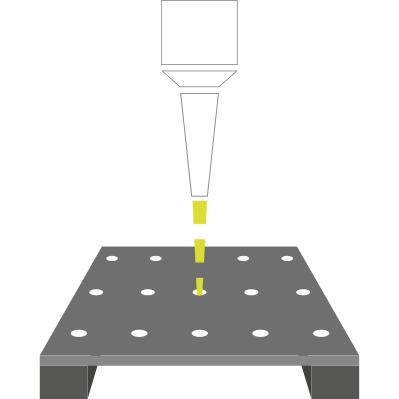
Laser drilling of metal, stainless steel, plastics, ceramics, copper and other materials in power electronics and mechanical engineering
- Ceramics: Including AlN, SiN and SiC, which are widely used in the electronics industry.
- Glass and silicon: These materials are often used in the semiconductor and optics industries.
- Plastic: Due to its versatility and low cost, plastic is used in a variety of industries.
- Metals: Including stainless steel and copper, which are used in many applications due to their high strength and conductivity.
Depending on the requirements placed on the drill hole and material, we use different drilling methods for laser drilling.
Laser drilling: Which processes are used?
-
Single pulse drilling for thin materials
In single pulse drilling, a laser beam pierces the material in only one pulse. This process can be carried out with or without process gas support (mostly remote processing on-the-fly). It is particularly suitable for thin materials from 0.005 to 0.1 millimetres and for perforating all kinds of foils and thin metal filters.
-
Percussion drilling for deeper holes
Percussion drilling is particularly suitable for deeper holes with material thicknesses of up to 4.0 millimetres, such as silicon wafers, injection-moulded plastic parts or cooling holes in turbine loops. The laser beam hits the workpiece in several individual pulses. This vaporises the material and expels it upwards.
-
Trepanning for shaped holes with larger diameters and vertical edges
For shape drilling of mechanically functional holes (fits) with larger diameters or holes with requirements for vertical edges, the laser beam is additionally moved during the drilling process. The material is expelled downwards while the laser beam moves relative to the workpiece. The advantage of this process is that precisely right-angled or negative-conical holes can also be drilled.
-
Deep hole drilling using the water-jet guided process
The smaller the structure width, the more difficult it is to manufacture. For deep-hole drilling with aspect ratios of up to 1:400, we resort to the so-called waterjet process. A thin water jet serves as a light guide. The laser beam is coaxially coupled to the water jet and thus guided through the workpiece in a focused manner. Find out more about water-jet guided laser processing.
Which products are manufactured using laser drilling?
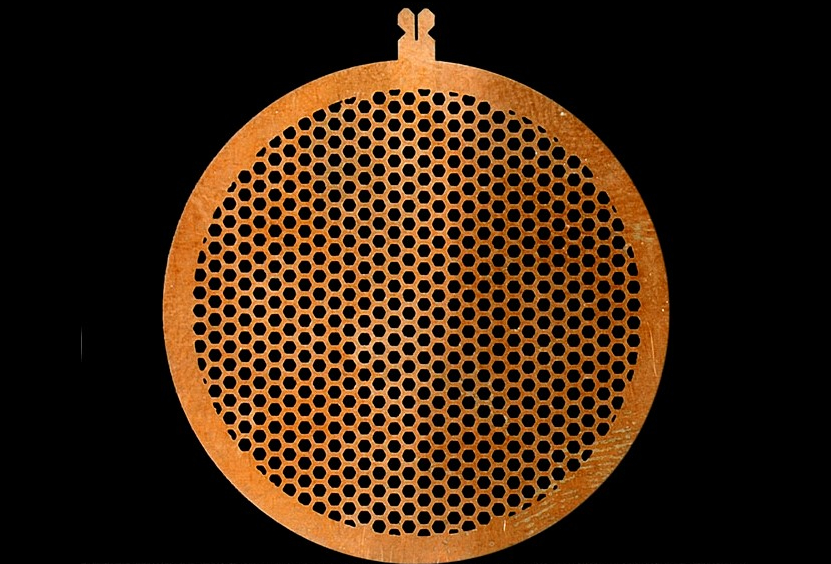
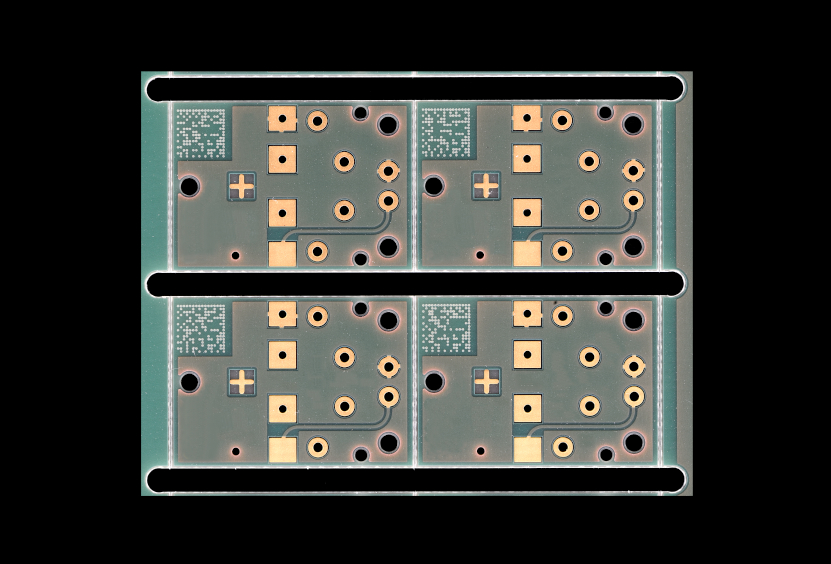
Printed circuit boards and arrays benefit from the precision and speed of laser drilling to enable complex circuits and connections. Injectors for fuel systems are often produced by laser drilling to ensure pinpoint flow rates. In the manufacture of strainers and filters, we also use the technology to create uniform holes for filtration.
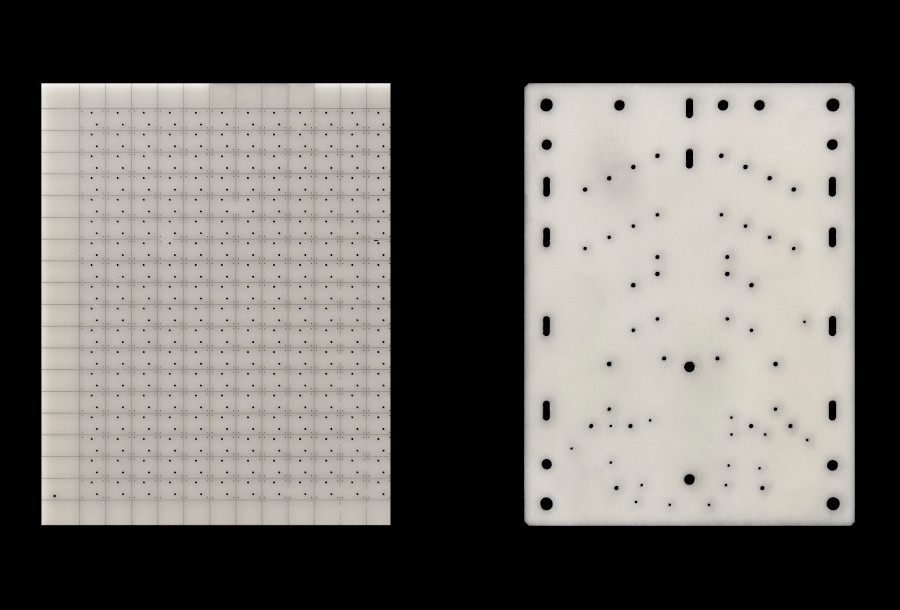
Shadow masks, templates, gauges, shims and spacer plates are also produced by laser drilling to achieve accurate shapes and dimensions. The use of laser drilling makes it possible to create fine details and complex patterns with high precision for doctor blade masks.
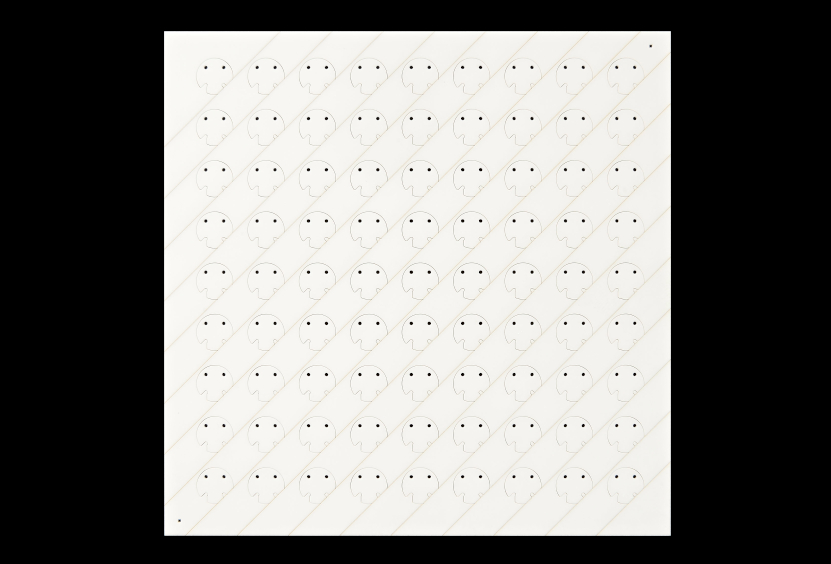
Precision holes are often drilled into ceramic substrates to enable electrical connections. Finally, hole templates, hole grids and hole matrices are produced by laser drilling to create precise and repeatable patterns.
Further services for you
Discover more diverse technologies - from laser welding and laser structuring to laser cutting and metal processing through to precision machining of drawing parts.
We look forward to your enquiry!