
High-precision laser cutting of non-ferrous metals
Laser processing of non-ferrous metals such as copper, nickel, bronze, or nickel silver takes advantage of their high electrical conductivity, thermal conductivity, and corrosion resistance. These materials are ideal for the manufacture of electrodes, busbars, lead frames, springs, plug contacts, EMC enclosures, and terminals. They are used in a wide variety of applications in the automotive and medical technology industries. Our special expertise lies in the procurement and processing of specialty materials. Discover our expertise in laser processing and work with us to apply it to your projects.
The advantages of non-ferrous metals
- high electrical conductivity
- high thermal conductivity
- high corrosion and oxidation resistance
- high bending and breaking strength
- use as cell connectors, terminals, seals, housing parts, contact springs, pins, heating foils, resistor material and much more
- plating non-ferrous metals provides additional surface protective layers for specific applications
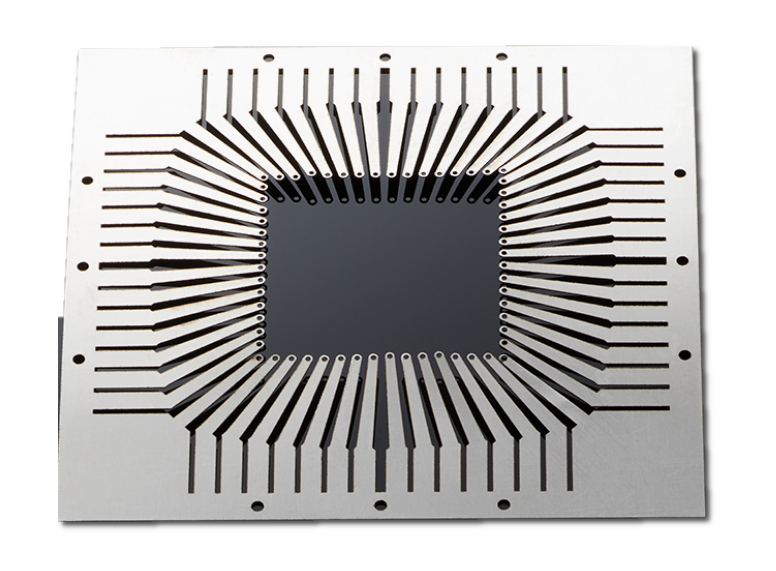
Non-ferrous metals in application
Non-ferrous metals are ideal for connection and transmission functions: Thanks to the properties of nickel silver and copper, they are suitable, for example, as stamped or base plates in the manufacture of plastic injection-molded parts with metal cores. Furthermore, the precise laser ablation of nickel silver enables the production of precision mechanical components, such as springs and connectors. Thin metal foil strips less than one millimeter thick are connected to the actual semiconductor chip via wire bonding as connection frames, known as lead frames. Alternatively, they serve as contact pins and connector elements for circuit board assemblies.
In contrast, solid copper busbars with a material thickness of up to four millimeters are cast directly into the component for use with high current flows. Here, pressed-in bolts are used for mechanical fastening.
In which components are non-ferrous metals used?
Electrical components, in particular, are often made from non-ferrous metals such as copper, bronze, and brass. They are used for electrodes, busbars, lead frames, plug contacts, cell plates, cell connectors, and terminal blocks. In addition, non-ferrous metals can be used in the following components and applications:
- Electronic components: Contact springs, (contact) pins, precision contact parts, circuit traces, and through-holes in printed circuit boards, as well as switch components, are often made from non-ferrous metals. Brass, for example, offers good electrical conductivity and is suitable for terminal blocks.
- Mechanical components: Springs, housing parts, guide rails, strips, thin sheet metal, and lamellae benefit from the material properties of non-ferrous metals. Bronze, for example, offers high strength, hardness, and good spring properties. Plated materials are also used here. Plating allows different material properties to be combined, for instance.
- Heat conduction: Due to their increased thermal conductivity, non-ferrous metals are ideally suited for use as heat shields and cooling elements.
Specific applications include busbars and baking parts, where copper’s high electrical conductivity is crucial. Heating foils and resistive materials also benefit from non-ferrous metal alloys. Sputter masks made from specific non-ferrous metals are manufactured depending on the application. In addition, non-ferrous metals are suitable for special seals, which can be refined as needed through coatings, such as zinc-nickel.
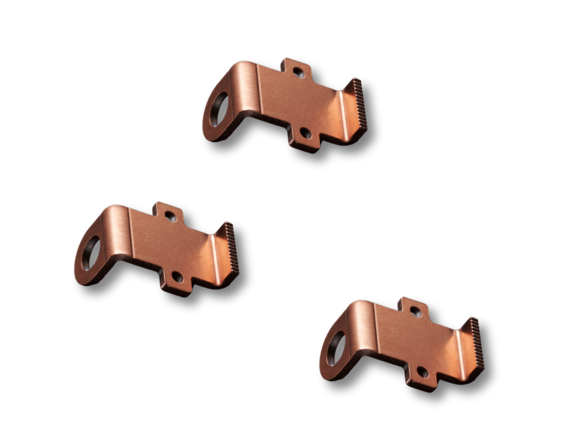
How precise is laser processing of non-ferrous metals?
Laser processing of non-ferrous metals enables highly precise machining. This is due to technological advances in laser technology, particularly in solid-state lasers—for example, high pumping efficiency ensures minimal workpiece heating. Additional advantages include:
- Clean cut edges without the need for post-processing
- Effective power delivery, which is necessary, for example, to overcome the melting point of copper.
Thanks to these technological advances, laser processing of non-ferrous metals is in no way inferior to that of other materials. You can find details on contour accuracy and manufacturing tolerances in our data sheets.
A wide range of processing options for your non-ferrous metals
We cut and weld thin sheets, foils and strips made of copper and other non-ferrous metals according to your individual ideas and wishes. We are happy to process your supplied material or offer you the service of procuring special materials in small quantities without processing them further.
You can find more information about our suitable technologies for processing non-ferrous metals below:
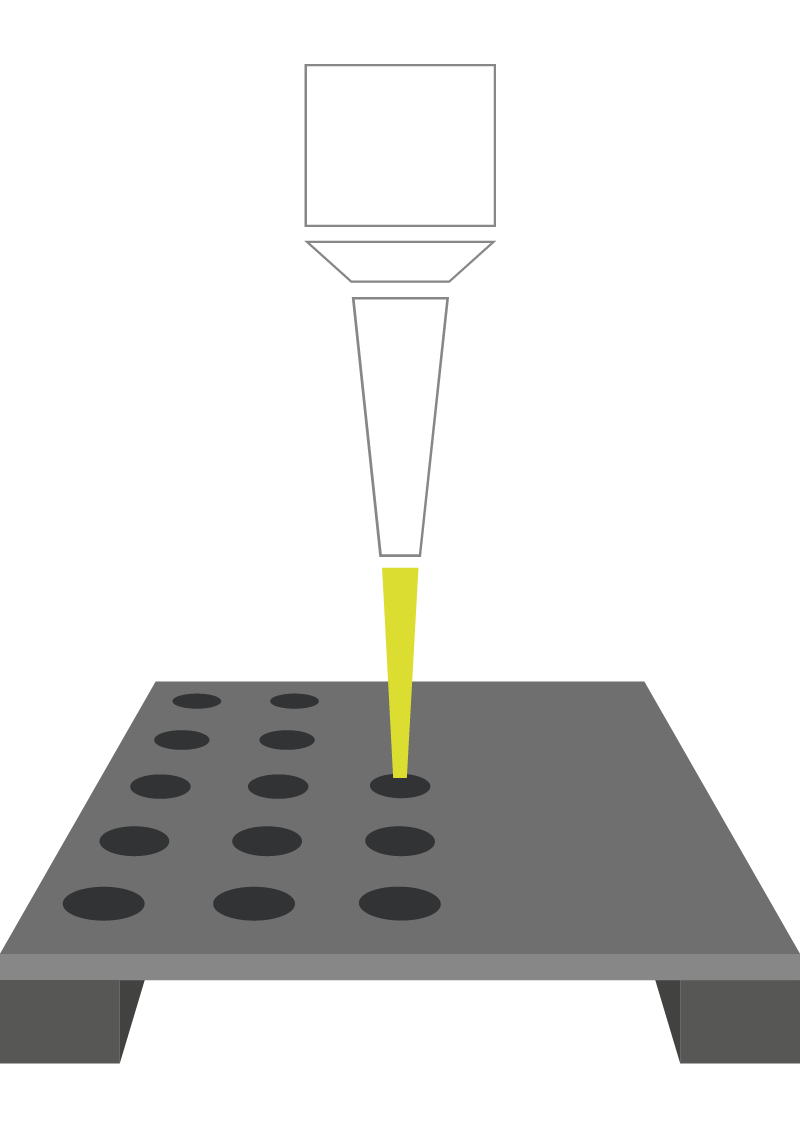
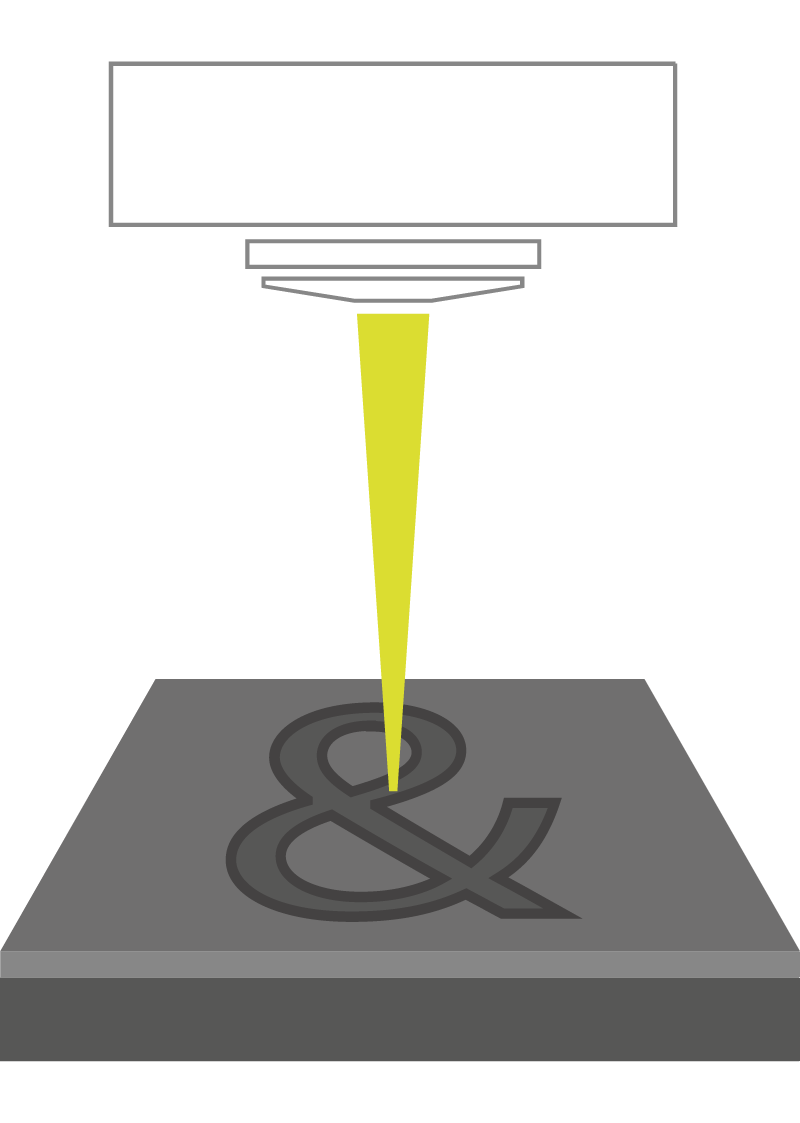
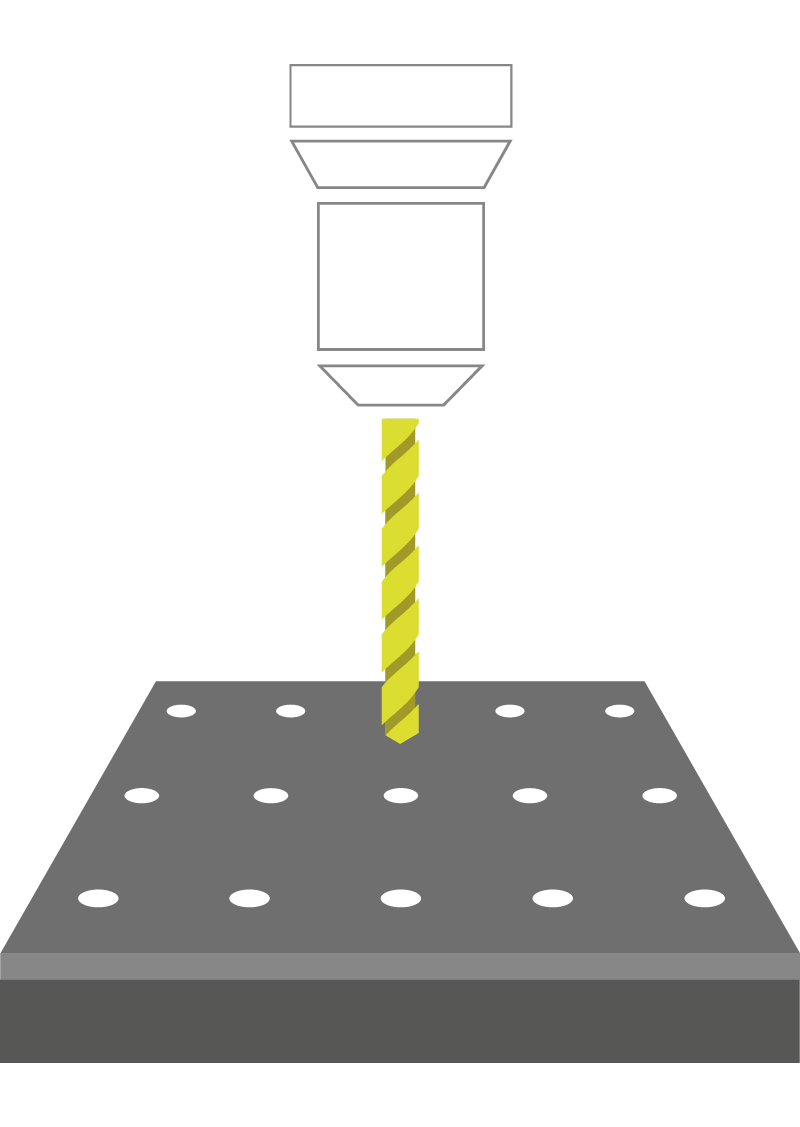
Laser Processing of Non-Ferrous Metals in Detail
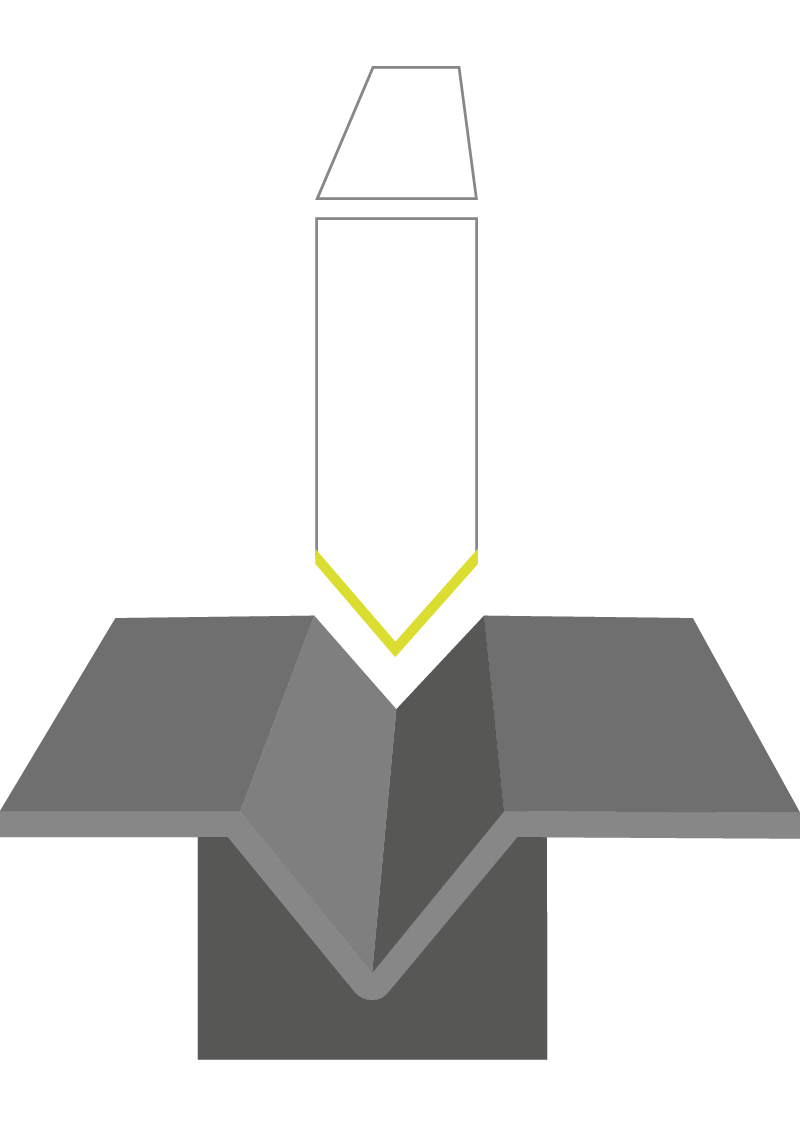
- Laser fine cutting enables precise edges depending on the material thickness.
- Laser fine welding enables robust joints between different materials, particularly in the aerospace and medical technology industries.
- Laser marking and laser engraving are suitable for intricate structures and markings, as they do not require mechanical processing. Additioanlly, it offers another option for permanently and accurately marking components, which is important for identification purposes or design considerations.
- Precision bending allows for the production of high-precision components with tight tolerances.
- Laser structuring enables the creation of extremely fine structures on surfaces, which is particularly important for decorative applications or microelectronics.
-
Which laser processing methods are not possible with non-ferrous metals?
Laser polishing is made difficult by the high reflectivity and heat sensitivity of some metals. In addition, varying surface structures can compromise process stability. For this reason, the method is rarely used.
Laser hardening is also not possible for non-ferrous metals such as copper, brass, and bronze, as their low carbon content prevents hardening through crystal structure transformation. Instead, processes such as precipitation hardening or work hardening are used.
-
What are the properties of non-ferrous metals?
Non-ferrous metals stand out for their diverse visual and functional characteristics. Copper shines with a warm reddish hue, while brass adds golden accents. Colored alloys and attractive patinas are also common among these metals. Their excellent conductivity makes them ideal heat and electrical conductors—silver and copper top the list of the best electrical conductors. In addition, non-ferrous metals are easy to cast and shape.
Additional properties:
- Chemistry: Non-ferrous metals are often corrosion-resistant, such as copper and aluminum. They readily release their outer electrons and are also highly alloyable, enabling countless material combinations.
- Processing: Thanks to their malleability, they are particularly easy to work with, making them ideal for precision components. Whether polished, etched, or anodized—the surfaces offer many design possibilities.
- Applications: Non-ferrous metals are environmentally friendly because they can be recycled with virtually no loss. Furthermore, they are non-magnetic, making them indispensable in the electrical industry.
-
Where are non-ferrous metals used?
Copper is indispensable in the electrical industry due to its excellent conductivity, where laser cutting enables the production of precise components. Bronze is used in mechanical engineering because laser cutting allows for complex shapes.
Nonferrous metals are indispensable in many industries. Red brass—a copper alloy—is found in fittings, gears, and pumps. Phosphor bronze and tin bronze are used in springs, electrical contacts, and musical instruments. Copper-zinc alloys offer high corrosion resistance, while beryllium copper is used for precision components in the aerospace industry and for spark-free tools. Thanks to their unique properties, these metals offer versatile applications across numerous industries.
-
How much does laser processing of non-ferrous metals cost?
The cost of laser cutting non-ferrous metals always depends on various factors, such as the type and thickness of the material. In addition, the desired complexity (contours and size) as well as the target quantity play an important role in pricing. We’ll work with you to determine the costs involved in implementing your project, based on your individual requirements.
-
How long does it take to process non-ferrous metals with a laser?
More Information on Laser Processing of Non-Ferrous Metals
We support you in the high-precision laser cutting of non-ferrous metals and adapt flexibly to your specific requirements. With our state-of-the-art 3D laser processing, we enable you to achieve precise and efficient manufacturing. Contact us to learn more about the versatile possibilities of laser processing and to successfully implement your custom project.
The specific data sheets of the individual materials are available on request. The material listing is only a current selection without any claim to completeness. Do you have special requirements? We will be happy to advise you personally on your questions regarding our available materials and services.
